2004 Indian Ocean tsunami: some countries had two or three hours, but no one warned them
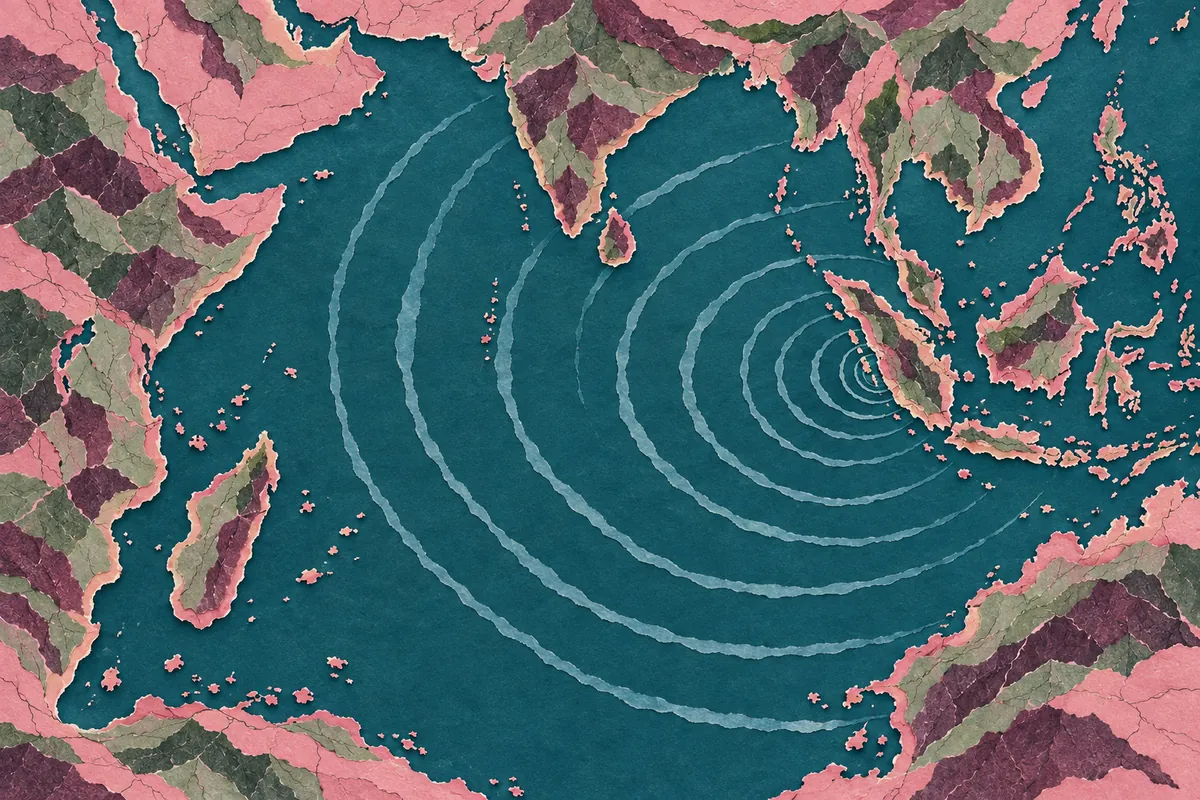
On the morning of 26 December 2004, a magnitude 9.1 earthquake struck off Sumatra, Indonesia. The tsunami crossed the Indian Ocean as far as the east coast of Africa and was the deadliest in recorded history. There was no tsunami warning system in the Indian Ocean at the time, and some countries were hit two or three hours after the quake. This case study draws on records from the U.S. Geological Survey and UNESCO.
Region-wide death tolls were counted differently by each country and at different times; this page cites only the USGS figures for Aceh and North Sumatra provinces in Indonesia.
01 Key facts
Based on sources
- Time
- 7:58 a.m. local time on 26 December 2004 Source 1
- Location and magnitude
- Off the northwest coast of Sumatra, Indonesia; magnitude 9.1, on the boundary between the India and Burma plates Source 2
- Tsunami height
- Runup heights of more than 30 m observed along the west coast of Sumatra Source 2
- Arrival
- Northern Sumatra about 30 minutes; Thailand about 1.5–2 hours; Sri Lanka about 2–3 hours; reaching as far as the east coast of Africa Source 2
- Casualties
- In Aceh and North Sumatra provinces alone: at least 108,100 killed, 127,700 missing and presumed dead, 426,800 displaced Source 2
02 What happened
Based on sources
- 07:58 (local)
The magnitude 9.1 earthquake struck, lifting the sea floor several meters and sending tsunami waves out in all directions. Source 1 · Source 2
- Minutes later
NOAA's tsunami warning centers in Hawaii and Alaska issued information bulletins to Pacific nations, but the Indian Ocean had no tsunami warning system. Source 3
- About 30 minutes later
The tsunami reached northern Sumatra. Source 2
- About 1.5–2 hours later
The tsunami reached Thailand. Source 2
- About 2–3 hours later
The tsunami reached Sri Lanka and went on to the east coast of Africa. Source 2
- Afterwards
The United Nations received a mandate to strengthen tsunami early warning and mitigation worldwide, led by UNESCO's Intergovernmental Oceanographic Commission. Source 3 · Source 4
03 Key lessons
There was time, but no warning
Based on sourcesSource 2 · Source 3
UNESCO's International Tsunami Information Center explains that tsunamis in the Indian Ocean were rare and far apart, which may explain why no warning system had been developed there. As a result, Sri Lanka was hit about 2–3 hours after the quake and Thailand about 1.5–2 hours after, yet no effective warning reached the coast in that time.
What you can do todayWhen visiting a coast abroad, check whether there are tsunami warnings and evacuation signs; if you feel a strong quake at the beach or hear of a big quake offshore, head for high ground first.
The last mile of a warning system is people who are ready
Based on sourcesSource 4 · Source 5
UNESCO explains that an end-to-end warning system begins with rapid detection of a sea-level disturbance and ends with a well-prepared community capable of responding appropriately to a warning. Instruments and alerts are not enough without people who know how to escape.
What you can do todayMake sure everyone in your family knows the three signs of a tsunami: a strong or long earthquake, the sea suddenly drawing back or rising, and a loud roar from the ocean.
Near the epicenter, there are only tens of minutes
Based on sourcesSource 2 · Source 5
The tsunami reached northern Sumatra in about 30 minutes, with runup heights of more than 30 m along Sumatra's west coast. U.S. Ready.gov advises: if you see natural signs of a tsunami or receive an official warning, don't wait, leave immediately, and choose places 100 feet (about 30 m) or more above sea level, or at least one mile inland.
What you can do todayIf you feel strong shaking at the coast, head for high ground or inland as soon as it stops. Don't wait for a warning and don't go back for belongings.
04 If it happened where you live
Based on sources
Taiwan
Taiwan's Central Weather Administration: if you hear a tsunami warning or feel violent shaking at the coast, move quickly away from the shore to high ground; the principle is "go high, go inland". Never stop to watch if the sea suddenly recedes, but the sea does not always recede before a tsunami. Source 6
Japan
Japan Meteorological Agency: if you see or hear a tsunami warning or advisory, or feel strong or long, slow shaking at the coast, leave the shore and evacuate to higher, safe ground; tsunamis strike repeatedly, so never go back until the warning is lifted. Source 7
South Korea
Korea's National Disaster and Safety Portal: if you feel an earthquake on the coast, a tsunami may arrive soon; allowing for traffic jams, leave the coast or riverside as quickly as possible for high ground, and don't go down to low ground until the warning is lifted. Source 8
United States
U.S. Ready.gov: if you see natural signs of a tsunami or receive an official warning, don't wait, leave immediately; choose places 100 feet or more above sea level, or at least one mile inland. Source 5
05 Original sources
- The Night the Earth Shook U.S. Geological Survey (USGS)Opening paragraphs (7:58 a.m. local time) · 19 December 2024 · Sources read 2026-10-17
- Indian Ocean Tsunami Remembered — Scientists reflect on the 2004 Indian Ocean that killed thousands U.S. Geological Survey (USGS)Cause and Areas Impacted; Tsunami Research · No date shown (10th-anniversary story) · Sources read 2026-10-17
- Background Notes on the Indian Ocean Tsunami International Tsunami Information Center (UNESCO-IOC)The Indian Ocean Tsunami · 2005 (statement by the IOC Executive Secretary) · Sources read 2026-10-17
- End-to-End Warning Systems UNESCO Intergovernmental Oceanographic Commission (UNESCO-IOC)Page introduction · No date shown · Sources read 2026-10-17
- Tsunamis FEMA Ready.gov (United States)If you are under a tsunami warning; Prepare now · Page shows last updated 2026-05-11 · Sources read 2026-10-17
- 地震百問:93. 應如何避免海嘯災難? Seismological Center, Central Weather Administration, TaiwanFull text · No date shown · Sources read 2026-10-09
- 津波から身を守るために Japan Meteorological AgencyEvacuation; stay alert until the warning is lifted · No date shown · Sources read 2026-10-17
- 지진해일 국민행동요령 National Disaster and Safety Portal, Ministry of the Interior and Safety, South KoreaWhat to do when a tsunami occurs · No date shown · Sources read 2026-10-17